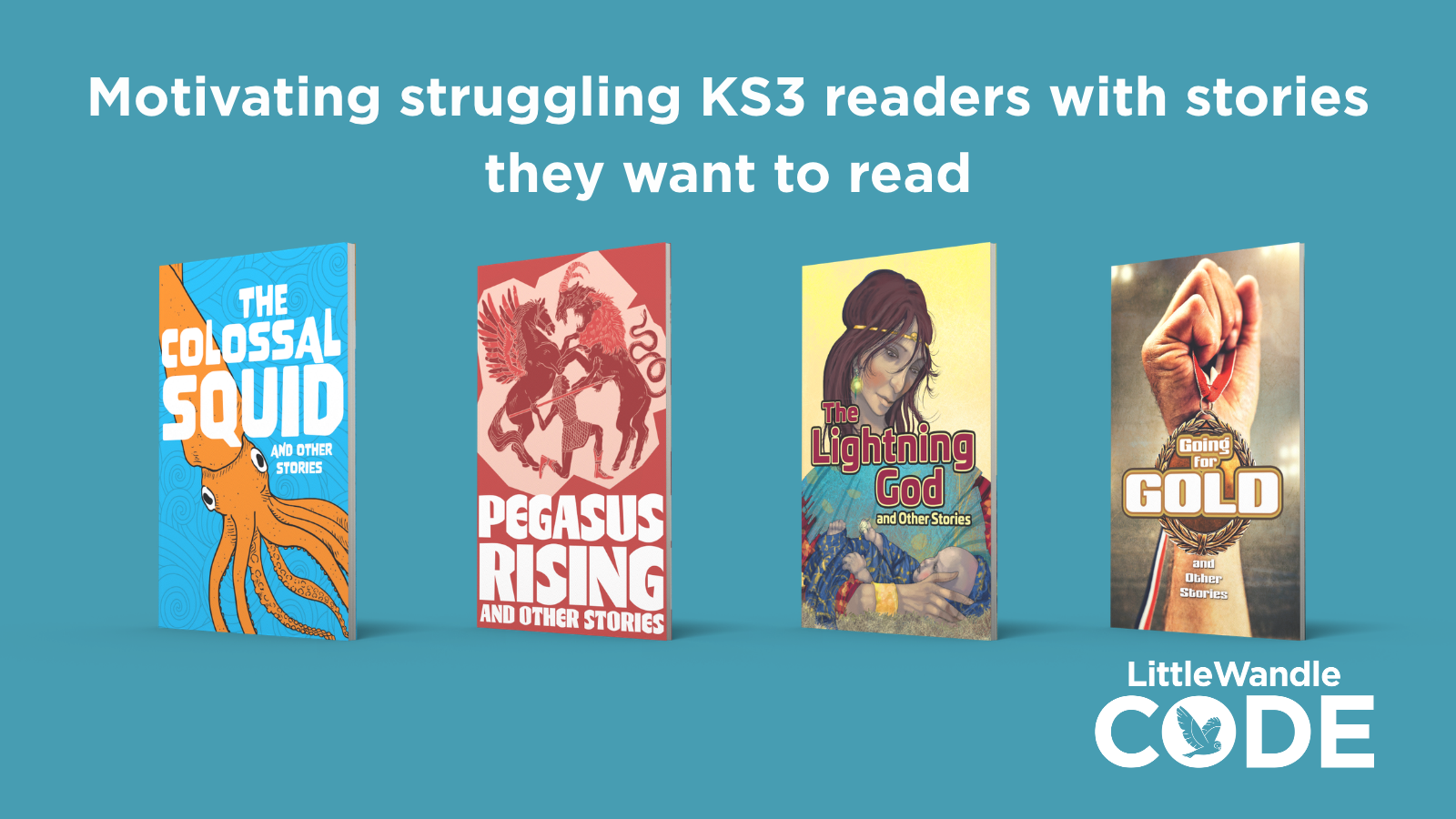
Support your struggling Key Stage 3 readers to become fluent and confident with our all-in-one phonics intervention and assessment programme.
Join now Book a free information briefing
Featured in Teach Secondary – Literacy Lead Sabrina Sulliman from Southfields Academy explains how her school has implemented Little Wandle Code and what the impact has been for children and staff.

Created with and for secondary schools, Little Wandle Code is an all-in-one Key Stage 3 phonics intervention and assessment programme that systematically improves your struggling readers’ decoding skills, laying the foundations for them to become confident, fluent readers.
Combining the trusted phonics expertise of Little Wandle with FFT’s 25-year track record of data and assessment innovation, Little Wandle Code is further strenghtened by Collins, whose award-winning books have supported generations of children to learn to read.
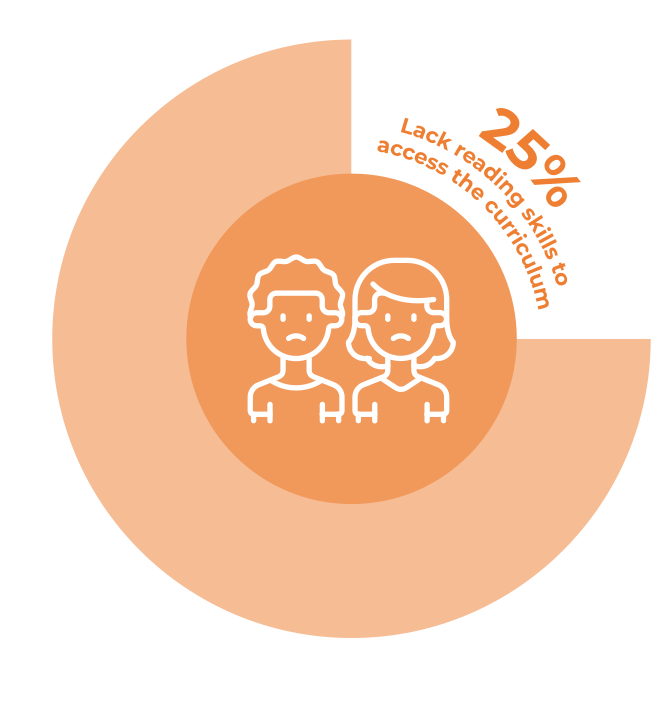
Right now, around 25% of students arrive in Year 7 without the reading skills they need to access the secondary curriculum. Left unaddressed, low literacy puts these children at serious risk of low self-esteem, poor behaviour and persistent absence now and lower earnings, possible unemployment and poor mental health in the future.
At the same time, reading for pleasure is at a 20-year low with only one in three children aged 8-18 saying they enjoy reading in their free time (National Literacy Trust 2025).
The planned introduction of the Year 8 reading test, coupled with inclusion of Key Stage 3 in the Reading Framework (2023), confirms the government has identified that equitable access to the curriculum is now a national priority.
 Tried and tested
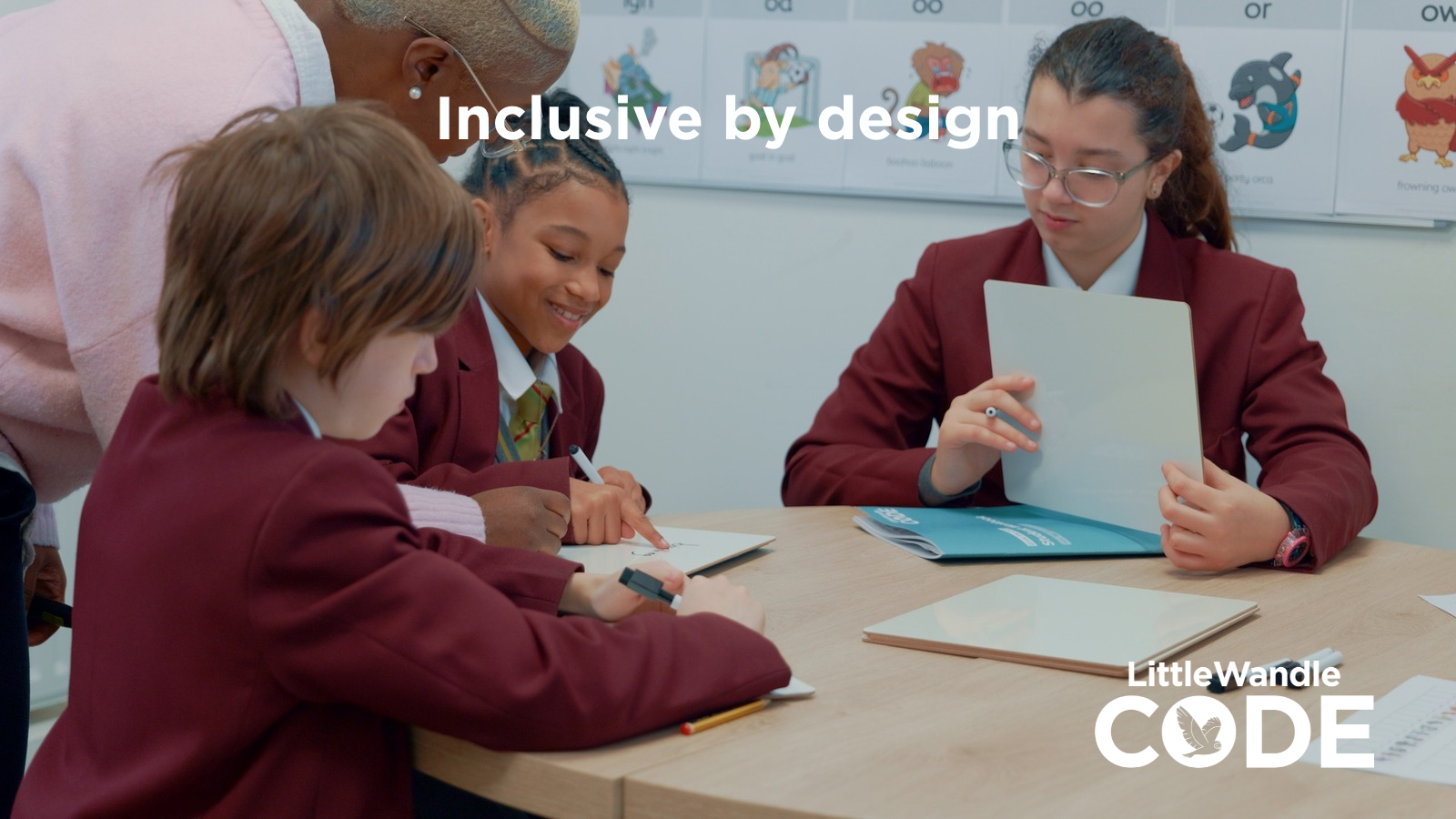
Developed with 60 mainstream and special secondary schools, Little Wandle Code’s inclusive design makes the phonics intervention ideal for children with SEND or EAL.
 Supports reading for pleasure
Our programme-wide emphasis on loving to read, not just learning to read, supports students to build lifelong reading for pleasure habits.
 Includes full training for all staff
Scripted lesson formats and an on-demand, video-based training programme allow secondary school staff to quickly build the phonics knowledge they need to lead and deliver successful interventions.
 Builds self-esteem and supports transition
Small-group, face-to-face phonics interventions using appealing, age-appropriate resources build Key Stage 3 students’ confidence as readers as well as supporting Year 7 transition.
 Assessments linked to next steps for teaching
Built-in assessments measure students’ reading skills and provide a clear journey for each struggling reader from identification to intervention and progress.
 Provides clear monitoring and reporting
Ongoing and summative reading assessments allow easy monitoring, reporting and sharing of information about each Key Stage 3 student’s phonics progress.
 Evidence-led approach
Informed by the latest educational research about how Key Stage 3 students learn the foundational skills underpinning expert reading.
 Supports vocabulary development
Phonics interventions for Key Stage 3 students use Tier 2 and 3 subject-specific vocabulary directly linked to the national curriculum to build vocabulary.

The structured, consistent approach of the programme appears to be supporting not just phonics development but also broader academic engagement and literacy
Natasha, Specialist TA, Southfield Academy
Pupils have noticed impact on their lives outside of school. ‘I can now read the subtitles on my computer game’ as an example of the effect on their home lives.
Joe Sumner, Literacy Lead, Bower Grove School
It is so well constructed and the resources are fantastic. Pupils respond positively and it is easy to implement.
Kelley Bloemink, Literacy and Intervention Lead, Garth Hill College
Great to use, easy to understand and no need for hundreds of resources.
Jakki Hook, Phonics Lead, Gilbert Inglefield Academy

 Login
Login