
 Login

Why reading engagement and Reading for Pleasure matter in Key Stage 3
Reading engagement and reading success are closely connected. Students who read regularly and widely increase their vocabulary, broaden their knowledge and develop greater confidence. This makes them more likely to choose to read which creates a positive cycle that supports both attainment and enjoyment.
The reading framework highlights the importance of maintaining this cycle throughout adolescence. However, those students who have experienced difficulty with reading often arrive in secondary school with negative experiences of reading and a belief that it is simply not for them.
Secondary schools therefore face a dual challenge: supporting students who are still developing the reading skills they need to access the secondary curriculum while also fostering positive reading habits.
The Department for Education (DfE) has announced £5 million of funding for reading materials in secondary schools as part of the National Year of Reading, recognising the important role reading engagement plays in improving literacy outcomes.
Rebuilding a reading identity
One of the greatest challenges schools face is helping struggling readers to begin to see themselves as readers. Repeated difficulties with reading can affect not only attainment but also motivation and willingness to engage with texts.
Addressing this requires more than improving decoding skills alone. Students need opportunities to experience success, to engage with meaningful texts and to develop positive reading habits.
Little Wandle Code’s You as a Reader survey provides valuable insights into young people’s attitudes to reading.
Questions such as ‘Is reading easy or difficult for you?’ and ‘Reading for me is …’ help schools understand students’ reading identity and confidence, while questions about reading at home, book ownership and library membership provide a clearer picture of students’ reading habits and access to books. The survey also explores the genres and authors students enjoy, helping schools identify the texts most likely to engage them.
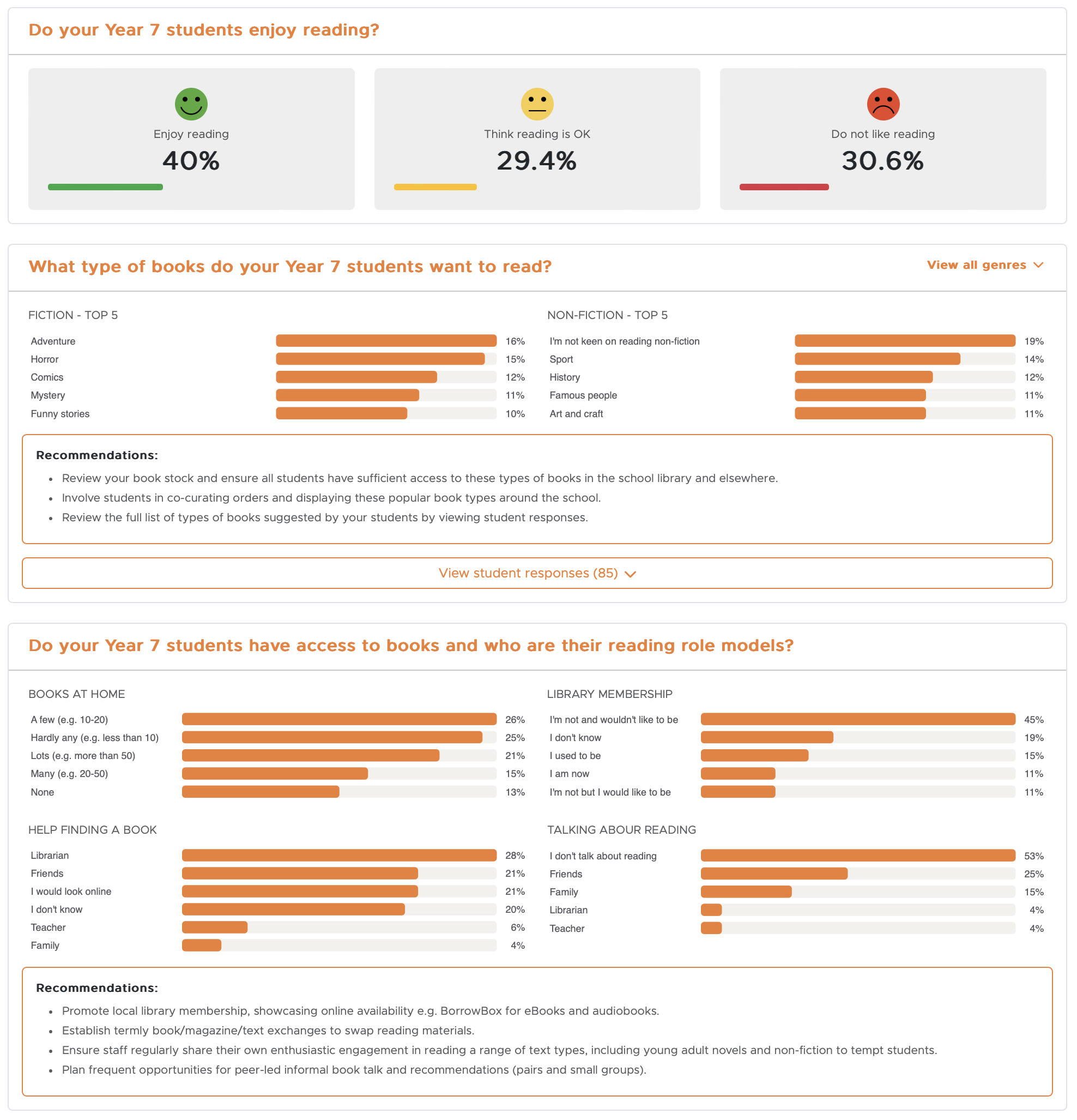
Using these findings, alongside the DfE funding, to ensure that your reading materials reflect the preferences of your students, rather than making assumptions about what they want to read, allows you to maximise the impact of any investment.
Making space for Reading for Pleasure
When schools are focused on closing gaps in reading attainment, Reading for Pleasure can sometimes feel difficult to prioritise. Yet Reading for Pleasure is not separate from reading attainment; it is an important contributor to it.
For struggling readers, opportunities to listen to and discuss high-quality texts can be particularly valuable. Shared reading experiences allow students to engage with stories, poetry and non-fiction without the barriers that independent reading can sometimes present. They also reinforce the idea that reading has a purpose beyond assessment and intervention.
For this reason, every unit in Little Wandle Code includes a dedicated read-aloud session. Teachers are supported to share high-quality texts with their groups, creating opportunities for students to listen to, discuss and enjoy a great book together. These sessions are designed to be pleasurable reading experiences, helping students reconnect with books.
Success breeds engagement
When students can read with accuracy and understanding, they are more likely to participate and persevere when faced with challenges. Success builds confidence, and confidence encourages further engagement with reading.
In Little Wandle Code, students apply their learning through fully decodable anthologies that contain only previously taught code. Because the texts are closely matched to what students know, they can focus on building fluency, comprehension and confidence. The anthologies include engaging stories, poems and non-fiction texts that respect the students’ ages and interests while enabling them to experience reading success.
Schools using Little Wandle Code often report that as students’ confidence grows, they become more willing to read aloud, discuss texts, tackle unfamiliar vocabulary, borrow books and participate more fully in classroom reading. These changes in attitude and habits are just as significant as improvements in attainment.
Helping young people become confident readers is essential but helping them to choose to read has an equally lasting impact. Through shared reading, carefully matched texts and an understanding of students’ reading identities, schools can help more young people to develop a positive relationship with reading and to begin to see themselves as readers once again.